 RuvidaMente









































While coffee has been known in the Muslim East since remote times, it was first introduced in the West, in Venice, in the seventeenth century by Prospero Alpino, a
botanist and physician who brought with him some sacks of coffee that he had bought during a trip in the East. The first Venetian coffee house, in fact, opened in 1640, and shortly thereafter the
word “café” became synonymous, in all of Italy, with both the beverage and the place where it was served. In 1763, there were as many as 218 coffee houses in Venice. Coffee, considered
to be a token of love and friendship, had become extremely popular: Venetian lovers had taken on the habit of sending trays full of chocolate and coffee to their beloved ones as proof of their
love and affection.
But in Italy as elsewhere, coffee hasn’t had an entirely easy life. In the beginning, its popularity alarmed the Catholic Church, some of whose more fanatical members
claimed that it was the “beverage of Satan” and urged Pope Clement VIII to ban its consumption by the believers. The pope, however, decided to taste a cup of coffee himself and soon came to the
conclusion that there was no harm in drinking it. Needless to say, the pontiff’s approval opened the doors to future successes.
In the 18th century, coffee became known as the “beverage of the intellectuals.” Men of culture, in fact, were not only convinced that coffee was a refreshing
beverage, but they also argued that it could cure almost any illness.

From the very beginning, the art of coffee making became a matter of ongoing debate as each and every town in Italy developed its own secret techniques, some of which
even found their way onto the pages of Italian literature.
Through the centuries, Italians invented many coffee-making tools and utensils, most of which have now been forgotten. The only two that are still in use are a
household utensil called “moka” and the “espresso” coffee machine used in cafés.
Some people also use the “napoletana,” a rudimentary utensil that requires great skill if one is to make good quality coffee with it.
But one cannot talk about Italian coffee without mentioning that other great Italian beverage: cappuccino. This well-known beverage is a classic feature of
Italian cafés, not to be confounded with its cousin, the caffelatte. Cappuccino is made with espresso coffee to which the barman adds milk that has been brought to a boil with a gush of
steam. The combination of these ingredients and the skill of the barman yield a unique beverage that has been imitated all over the world and, yet, is quite inimitable.
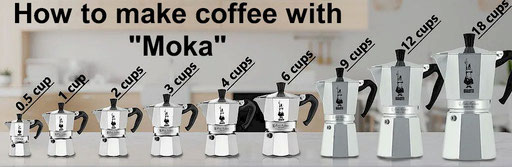
It is sufficient to follow a few simple rules in order to make real Italian coffee at home:
- Buy good quality coffee, either ground specifically for use with “moka” (they come in vacuum-packed containers) or beans (to be freshly ground right before use)
- Use fresh, light water. Brackish, calcareous or hard water inhibits the release of aromas. Never use water that has already been boiled once. Use cold water only.
- Use the right proportion of coffee and water. “Moka” coffee makers come in various sizes made for specific quantities. The rule of thumb is to use one tablespoon of ground coffee and four to five tablespoons of water to make one cup of coffee.
- Do not press the coffee into the coffee maker. Fill the moka gently, flattening out any lumps.
- Place the moka over the flame, keeping the lid open so that steam water doesn’t drop into the container, altering the taste of coffee.
- Don’t leave the coffee maker unattended. Turn off the flame a few seconds before the coffee has stopped gushing out into the moka container. Coffee should never boil, or it will taste awful.
- Serve the coffee hot, as soon as it has been made, in order to enjoy it at its best. When coffee is left over, it should be kept in a glass or ceramic container (but never in metallic containers) and reheated either in water bath (bain-marie) or on an electric stove, but never on direct flame.
- Carefully clean the coffee maker with boiling water, but do not use soap or detergents. The filter must be cleaned very carefully in order to clear out any residues.
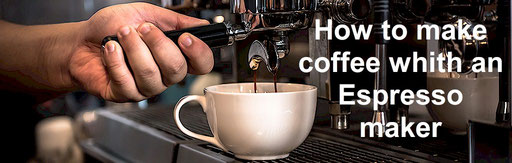
The rules for making espresso are rather strict because of the technology involved. The quality of a cup of espresso depends on three factors:
1. The blend of coffee
2. The grinding
3. The espresso maker
The Blend
The key here is to know how to blend various coffee types in order to get the desired aroma, taste and body and maintain the quality of that blend through time.
Generally speaking, the more complex the blend is (usually between five and eight different varieties of coffee can be used), the easier it is to maintain its quality
over time. This is especially true because as some plants grow old and are replaced with younger ones with more marked characteristics, the other varieties help keep the general characteristics
of the blend unaltered.
The Grinding
The heat-producing grinding process is a delicate one: one mistake and a promising blend can turn into burnt powder. If ground too coarse, coffee becomes less soluble
and does not release its aroma and taste into the water. If ground too fine, it yields an excessively strong beverage that tastes like burnt powder.
The Espresso Maker
The quality of the espresso depends on how well the espresso maker has been calibrated. Each machine must be calibrated in a different way, but there are some
parameters that are the same for all espresso makers:
1. The temperature of the water must be between 185 F and 197 F.
2. The boiler pressure must be between 1.2 and 1.4 bars in hydraulic
or continuous dispensation espresso makers.
3. The pressure of the centrifuge pump must be set at 9.2 bars.
4. A minimum quantity of ¼ oz. of coffee must be used per cup.
5. Coffee must be pressed into the filter at a pressure of between
44 lbs and 55 lbs.
6. Brewing time for 1 oz. of liquid must be between 25 and 32
seconds.
7. The temperature of the coffee in the cup, immediately after
brewing, must be about 150 F.






SEARCH THE SITE
