 RuvidaMente












































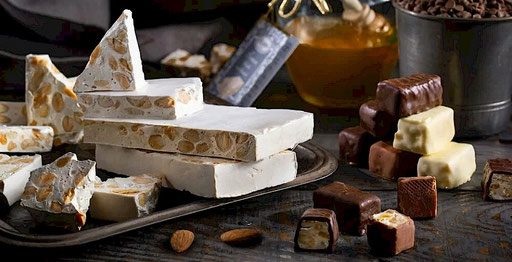
The roots of the Torrone history are based in ancient Rome. This delicacy made of honey, almonds and albumen was reserved for formal functions or as offerings
to the gods. Various other cultures have versions of Torrone, such as the Arabs, who are said to have introduced it to the Spanish. Italy has its own well-documented version of Torrone, born on
October 25, 1441.
At the wedding of Bianca Maria Visconti and Francesco Sforza, the bride not only had many jewels, money and riches of every kind as part of her dowry, but her father
also offered the city of Cremona itself. To commemorate this, the court's pastry chefs decided to make a new confection in the shape of the city's tower named the Torrione, in order to
represent the city. By mixing almonds, honey and beaten egg whites and cooking them for long hours over low heat, they precisely reproduced the large tower that dominated the city.
Needless-to-say, the sweet was a great success with the guests who came from Europe, and soon requests for the city's special delicacy were received from all over the
world. Today, modern production techniques make Torrone easily available to everyone, and many new versions have been developed. Among the regional variations is a more tender Torrone from the
Abruzzi region, or the variety flavored with aromatic Strega liqueur from the city of Benevento in Campania.
Torrone with hazelnuts, pistachios and chocolate is also made in addition to the classic almonds and honey.
No longer eaten just during Christmas, but also as small snacks during the day and after dinner, Torrone is now also available in the practical single serving
packages known as torroncini.






SEARCH THE SITE
