 RuvidaMente







































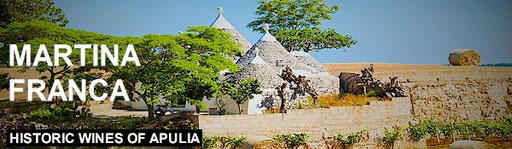
Around the year 1000, the Tarentines, in flight from their city, which the Saracenes were besieging, arrived on Monte San Martino, an area dotted with arid rocky
stretches. The fugitives settled in the area and, under the guidance of Basilian monks of Greek origin, began to break up and till the soil. They cleared the stones from the fields, using them to
build trulli, or conically shaped structures, and planted the first vineyards.
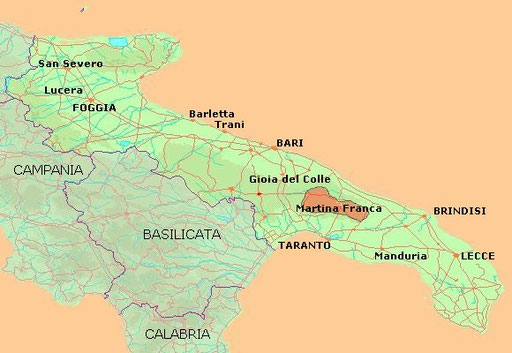
The community of Martina Franca, from which the wine takes its name, is considered the gateway to the fertile valley of the Itria, which contains more than 15,000
trulli. The town was founded in 1300 by Filippo I d’Anjou, who decided to build a fortress on the highest point of Monte San Martino to check the depredations of bandits and wild animals then
roaming the district.
Since a tough and resilient population was required to deal effectively with beasts and bandits, the king extended a series of privileges to all those who would settle
in the new town, which he named Terra di Martina. The additional name Franca was attached to the original several decades later, when another privilege, freedom from all
taxation, was extended to the new community.
The wine made from the grapes grown around the town is one of the brightest and most delicate of all Apulian products, a considerable contrast with the roughness of the
community’s original inhabitants. It is made principally from the Verdeca and Bianco d’Alessano varieties. The Bianco, of extremely ancient origin, is a white-grape
variety that is cultivated in an area extending from the lower Salento to the Murgia area with its trulli and the adjoining valleys occupied by the communes of Martina Franca, Cisternino and
Locorotondo.
Map of the production area
GO TO SOUTH REGIONAL WINES

OR MOVE TO THE OTHER MACRO-AREAS




SEARCH THE SITE
