 RuvidaMente










































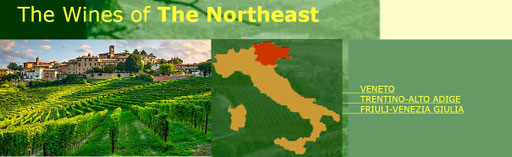
TASTE OF THE FUTURE IN THE VENEZIE
The three northeastern regions, known collectively as the Tre Venezie or simply the Venezie, set the pace in Italy in the crafting of modern wines from a great range of
varieties both native and international. They began in the 1970s by introducing new techniques for production of white wines, following up in recent decades with ever more sophisticated methods
for reds.
Two of Italy's leading wine schools are located in the Venezie (at San Michele all'Adige in Trentino and Conegliano in Veneto). The world's largest vine nursery is at
Rauscedo in Friuli. The nation's most important wine fair, Vinitaly, is held each spring in Verona.
Together Veneto, Friuli-Venezia Giulia and Trentino-Alto Adige produce less than a fifth of Italy's total volume of wine but account for about a third of the
DOC. Veneto leads the way, after recently replacing Apulia and Sicily as the largest producer of wine among the 20 regions, while increasing its leadership with DOC, due in
great part to the Verona trio of Soave, Valpolicella and Bardolino. Friuli-Venezia Giulia and Trentino-Alto Adige are modest producers in terms of volume but boast enviable percentages of
classified wines in the total.
The determining quality factor in all three regions is the climate influenced by the Alps, of which the Venezie are on the sunny side, protected from the damp cold of
northem Europe. Vineyard conditions range from cool at high altitudes to warm in the near the Adriatic Sea and along the valleys of the Po, Adige, Piave and Tagliamento rivers.
Although the culture of the Venezie, like the name, was determined by the ancient Venetian Republic, strong influences can be felt from Austria and the Balkans. One
result is a cosmopolitan mix of vine varieties. Growers here work with an amazing assortment of native and imported vines to produce what are indisputably a majority of Italy's fine white wines
and a multitude of reds, ranging from the young and simplistic to the aged and complex.
In contemporary times, white wines led by Soave and Pinot Grigio had become popular around the world. But producers in Friuli and Trentino-Alto Adige
have fashioned wines of depth and style to dispel the notion that Italian whites are by nature light and fresh. Recently the trend that had favored whites in the Venezie has started to reverse
with increased plantings of varieties for red wines.
Verona's Soave, Valpolicella and Bardolino derive from native varieties. But in the central and eastern Veneto and Friuli imported varieties, such as
Merlot, Cabernet, the Pinots, Chardonnay and Sauvignon, share vineyard space with the local Tocai, Prosecco, Verduzzo, Refosco, Schioppettino, Ribolla Gialla
and Raboso.
In Trentino-Alto Adige red wines still prevail, dominated by the ubiquitous Schiava or Vernatsch, though the more distinguished Teroldego, Lagrein and Marzemino hold their own against Cabernet, Merlot and Pinot Nero. White varieties have
gained prominence there, led by Chardonnay, the Pinots, Sauvignon and Gewürztraminer.
Since so many varieties are grown, the practice in all three regions has been to group wines under a single DOC name for a large geographical area, such as
Veneto's Piave, Friuli's Collio Goriziano and the province-wide appellations of Trentino and Alto Adige. Though the lists may
be long, this geographical identity seems to aid consumers in connecting places with types of wine.
GO TO NORTHEAST REGIONAL WINES

OR MOVE TO THE OTHER MACRO-AREAS









SEARCH THE SITE
