 RuvidaMente































Several varieties share the name Vernaccia but they are completely different from one another, having in common only one characteristic: they are always to be
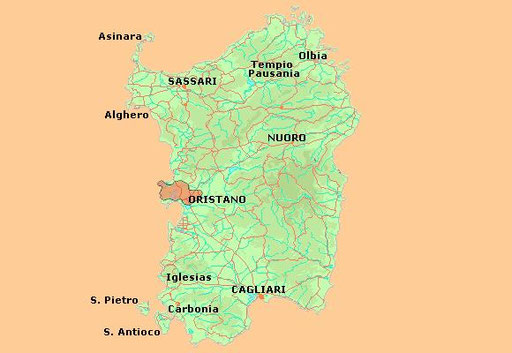
found in well-defined geographical areas and are not easily exported elsewhere. That is certainly true of this Vernaccia, which seems to do well only in the valley of the river Tirso in
the province of Oristano.
Since the search for its origins seems highly problematical, it may be just as well for once to accept the legend that it originated in the tears of Santa Giusta,
patroness of Oristano. According to the story, an epidemic of malaria was sweeping across the island, claiming many victims. The Sardinians were unable to do anything to check the spread of the
mysterious disease, which was especially widespread in watery areas, and the death toll rose steadily each day.
It was then that Santa Giusta descended from heaven to earth and, perceiving the suffering around her, began to weep and to pray to God to have pity on the unfortunate
people. Where her tears fell, many small plants immediately sprang from the earth, burst into full leaf and produced fruit.
Fearing that the vines might vanish as quickly as they had appeared, the people gathered the grapes, crushed them and put the must into large amphoras. As soon as the
ailing, weak with fever, drank a bit of this strange liqueur, they immediately felt better.
Since then, the Sardinians have resisted malaria and misgovernment by drinking Vernaccia, whose name is derived from the word vernum, or primavera (the
spring), the period when the vine that yielded the beverage that reinvigorated the Sardinians burst forth from the earth.
In the 14th century, the “Giudichessa” (woman judge) Eleonora d’Arborea encouraged the diffusion of Vernaccia by issuing a series of laws in 1335, the
Corte de Logu, which included provisions dealing with vineyards that assured more rational cultivation.
Map of the production area
GO TO SOUTH REGIONAL WINES

OR MOVE TO THE OTHER MACRO-AREAS




SEARCH THE SITE
