 RuvidaMente

















































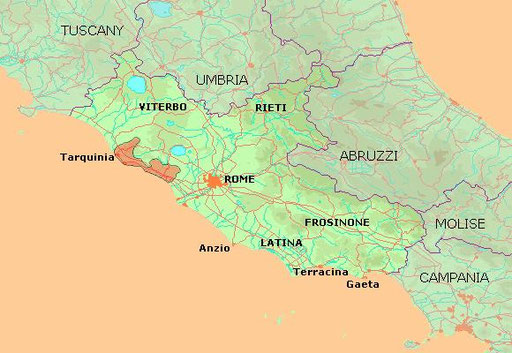
Cerveteri wine, both red and white, has always been produced in the northernmost part of the province of Rome, a district inhabited in ancient times by the Etruscans that is famous for its tombs. The rich archaeological and artistic troves found in the area clearly indicate the important role played by vine and wine in the lives of its ancient inhabitants.
Everywhere they flourished, the Etruscans applied the training system known as "vite maritata", in which the vines were trained to trees as living supports. It
is a practice that is still widely followed in many parts of central Italy. Small percentages of Tocai and Verdicchio, varieties that were introduced into the district in recent
decades, are combined with the classic breeds cultivated throughout the entire winemaking area of Latium, Trebbiano and Malvasia, in the production of Cerveteri
Bianco.
The Cerveteri Rosso is obtained from a combination of the most classic red-grape varieties of central Italy, Sangiovese, Montepulciano and
Cesanese.
In the sixties and seventies, it was the general custom in the area to train the vines in the "tendone" system. The contraction in consumption and the
increased emphasis by the consumer on products of high quality have led the producers since the beginning of the eighties to convert their vineyards to training systems that are less productive.
And, at the same time, they have been experimenting with new varieties.
Map of the production area
GO TO CENTRAL ITALY REGIONAL WINES

OR MOVE TO THE OTHER MACRO-AREAS







SEARCH THE SITE
