 RuvidaMente







































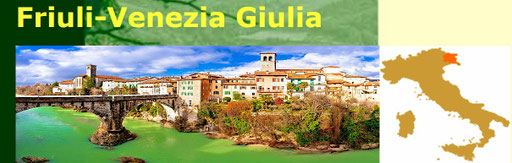
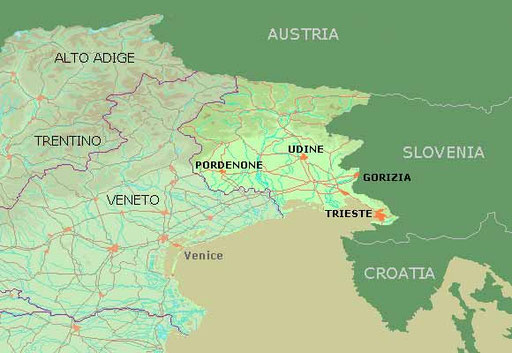
The compact region of Friuli-Venezia Giulia, commanding the northern Adriatic Sea with borders on Austria and Slovenia, continues to set the pace with modern Italian
white wine. Drawing from worthy native varieties and the choicest of the international array, Friulians have applied studied vineyard techniques and avant-garde enology to the production of
highly distinctive whites, as well as some eminently attractive reds.
Friuli has two DOC zones of exceptional status in Collio Goriziano, or simply Collio, and Colli Orientali del Friuli, adjacent areas that
follow the border of Slovenia from Gorizia west and northwest to Tarcento. The exchange of air currents between the Alps and the Adriatic has created a highly favorable habitat for vines on the
terraced slopes called ronchi.
Carso is a unique zone in the hills above the seaport and regional capital of Trieste. The other six DOC zones cover low hills or plains, but quality there can
be convincing, most notably from Isonzo, which rivals Collio and Colli Orientali for the class of certain wines.
Varietal wines dominate the multitude of types included in Friuli-Venezia Giulia's nine DOC categories (including part of Lison-Pramaggiore, shared with
Veneto). Only the Friuli Grave zone is large by national standards, producing some 30 million liters a year to stand with the top ten DOCs in volume.
Friuli has built a glowing reputation in Italy and abroad for white wines made by relatively small wineries and estates. The whites had long been dominated by Tocai
Friulano, a variety related to Sauvignon Vert or Sauvignonasse. But recently the European ruled that Tocai must change its name so as not to be confused with the
Tokay or Tokaji of Hungary, which is the name of a wine but not a vine.
Friuli's Malvasia Istriana, Ribolla Gialla and Verduzzo also can be intriguing, as can such admirable foreign varieties as Sauvignon,
Chardonnay and Pinot Bianco and the ever popular Pinot Grigio.
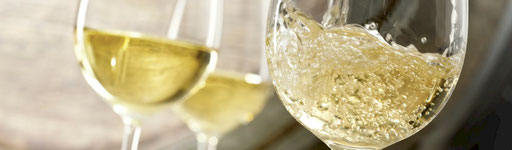
The Friulian style in whites favors the exquisitely fresh and fruity, with delicate fragrance and flavor that express clear varietal character. Many producers consider
their whites to be too pure and linear to benefit from wood aging. The style has been on target for the national market, which seems to favor the flavors and names of pure varietals. But there
are a growing number of exceptions to the rule, in white wines that gain depth and complexity from blending, oak aging and other artistic touches.
Friulian reds were traditionally light and fruity, best to drink within two to five years of the harvest. That style applied to the predominant Merlot and
Cabernet Franc, as well as to Pinot Nero and the worthy native variety of Refosco. But certain winemakers have heightened structure and nuance by blending Cabernet
Sauvignon, Merlot and other varieties and aging the wine in small oak barrels.
Friulians have shown an encouraging tendency to revive varieties that had been neglected. Foremost among the legends is Picolit, a white that ranked as one of
Europe's finest sweet wines around 1800, when it was favored by the Hapsburgs and other royal families. Despite low yields, Picolit has been coming back. So has Verduzzo, which
makes refined dessert wines in a place called Ramandolo in the Colli Orientali. Ribolla Gialla, a native of Collio, has benefited from new methods that make it into a
dry white of character.
Among the reds are Refosco, also known as Terrano, which can be made either light and fruity or into a durable wine for aging. Though rare and odd,
Franconia and Tazzelenghe make distinctive reds, but perhaps the Pignolo and Schioppettino varieties have the most intriguing potential.
Sparkling wines represent a growing field, as producers bring not only choice Pinot and Chardonnay grapes into their cuv˜es but also Ribolla for
fine spumante by the classical and charmat methods.

• Aquileia • Carso • Colli Orientali del Friuli •
• Collio • Grave • Isonzo • Latisana •
• Lison Pramaggiore • Ramandolo •
GO TO NORTHEAST REGIONAL WINES

OR MOVE TO THE OTHER MACRO-AREAS






SEARCH THE SITE
