 RuvidaMente









































The gustatory examination is performed on the palate, and involves not only the sense of taste but also the sense of touch, to confirm balance of basic flavors, as well
as texture and body.
Wine tastes are simpler than smells. They are sensed on the tongue, which, through the taste buds, detects four basic flavors:
• Sweetness
• Acidity
• Saltiness
• Bitterness
The most important for evaluating a wine are sweetness and acidity. Saltiness is barely perceptible and serves mainly to heighten sweet and acidic flavors. A hint of bitter adds interest to certain wines but pronounced bitterness is a negative factor.
Each flavor is sensed most strongly by certain parts of the tongue. But in each case there is a time lag from the moment the wine enters the mouth and the point when the taste is registered. Also each flavor remains evident for a length of time that determines its persistence.
Gustatory analysis aims to define the overall structure of the wine and takes into consideration the objective elements of pure taste (sugars, acidity, tannins, alcohol, body, and smoothness) and the volatile odorous components, or the purely olfactory elements that are perceived retronasally and allow us to evaluate the harmony, intensity, persistence, quality, and state of evolution.
The general structure of a wine consists of:
Fixed taste support
(the elements of pure taste)
• Sugars
• Acidity
• Tannin
• Alcohol
• Body
• Softness
The volatile odorous components
(the purely olfactory elements perceived retronasally)
• Harmony
• Intensity
• Persistence
• Quality
• State of Evolution

This examination assesses the quantity of residual sugars.
• DRY
The term describes a wine in which it is not possible to detect any trace of sugar which can be present in quantities less than gr. 2 per liter.
• OFF DRY
Wine which has a tenuously sweetish taste. Sugar residues are included in 4 and 12 grams per liter.
• SEMI-SWEET
Wine which is sweet to taste, but not predominantly so.
• SWEET
Sweetness is the dominant sensation.
• VERY SWEET
Extremely sweet. This characteristic should be found only in fortified wines or those made from partly dried grapes (passiti)
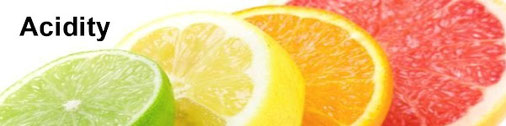
This examination is focused on identifying the presence and intensity of acids in wines. The classical sign of acidity is a tingling around and under the tongue accompanied by a sensation of freshness.
• FLAT
A wine definitely non harmonic because of its lack of acids. Flabby and flat, generally found in decrepit wines.
• SAPID
Even though the acids are largely present in the oral cavities, they do not stimulate their pseudo-fresh characteristic.
• FAIRLY FRESH
The sensorial perception of acids is sufficiently present.
• FRESH
This is the fundamental characteristic for all white wines, especially dry and, in particular, sparkling wines. The acids stimulate a pseudo-fresh sensation similar to that of mint, lemon, and
lemon-scented verbena.
• ACIDULOUS
A wine lacking harmony because of its excess level of acids.
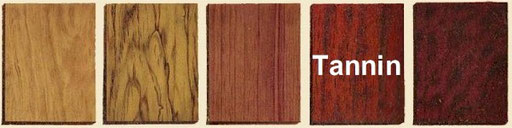
The quantity of tannins contained in wine is determined in this examination. The more tannin there is, the greater the sensation of surfeit-which blocks salivation and dries up the mucus membranes in the mouth.
• LACKING
Wine lacking tannin, therefore, giving an empty sensation.
• LITTLE TANNIN
Wine slightly lacking tannin.
• PROPERLY TANNIC
Wine having the correct tannic quantity and is regarded as optimal for its type.
• TANNIC
Wine in which the tannin slightly dominates all other structural elements.
• ASTRINGENT
Wine with an excessive amount of tannin and, therefore, dries up the mucus membranes in the mouth.
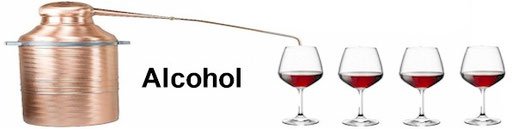
This examination takes into consideration the alcohol content of the wine. The greater it is, the more it produces a sensation of warmth, especially at the moment the wine is tasted.
• WEAK
Wine which has a moderate level of alcohol. The lack of alcohol is sensed.
• LIGHT IN ALCOHOL
Wine which has a moderate, but balanced level of alcohol.
• WARM
Wine containing a balanced level of alcohol, giving a pleasant pseudo-thermic sensation.
• VERY WARM
Wine containing a generous level of alcohol and the pseudo-thermic sensation is very evident.
• ALCOHOLIC
Wine containing an elevated level of alcohol making it lack in harmony with the other structural elements. The pseudo-termic sensation is very strong.

The body of a wine is the ensemble of its chemical components with special reference to its extracts-glycerin, mineral salts, sugars and polyphenols-that produce sensations of density and viscosity on the tongue and all the mucus membranes.
• THIN
Indicates a weak presence of the components of the wine, even though the alcohol level is within legal limitations (9% alcohol in volume, 4.5 g. per liter, anticipated extract from the production
disciplinary) and has an elusive odor.
• LIGHT IN BODY
The presence of the components of the wine is modest and could become characteristic of its type.
• ADEQUATE BODY
All of the components of the wine are quantitatively represented, giving it a good structure.
• FULL
Wines of great structure and very balanced; wines of great intensity and a persistent odor or flavor.
• HEAVY
Wines containing excessive extract material making it "heavy" and giving its taste a sense of tiredness.
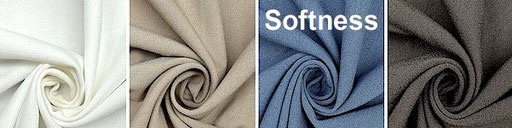
The substances responsible for a wine's softness are sugars, alcohol and glycerin, which also make it seem rounded and tasty. In current terminology, softness also refers to sapid sensations of
sweetness that are due to residual sugars, ethyl alcohol and glycerins and of warmth, due to ethyl alcohol. Sapid sensations of saltiness or acidity and tactile impressions of astringency due to
tannin are regarded as hard elements.
However, a wine can be more or less soft, depending upon its content of substances that produce sensations of sweetness in contrast to or combination with those that yield hard sensations. It is
interesting to note that the sensations of softness are registered by all the mucus membranes of the oral cavity, while sensations of sweetness are detected only by the taste buds on the tip of
the tongue.
• LACKING SOFTNESS
Independently from the color and body, a wine can lack softness, resulting from the immaturity of the acidic and tannic components.
• FAIRLY SOFT
If the acidic, tannic and bitter components have not sufficiently reached the maturation, they cover the soft substances (alcohol, sugars) and give an underlying sense of sharpness.
• SOFT
The persuasive, unyielding and velvet sensation found in white wines and in red wines, tasted at its optimal temperature.
• ROUNDNESS
The sensation of softness is accentuated to the point that there is an impression of sweetness.
• CHEWY
A wine in which contains important bodily components so that it appears full and heavy. It gives a heavy sensation of sugars and glycerines.
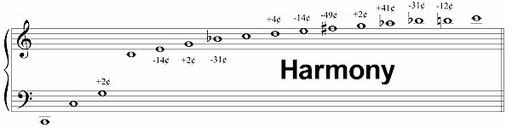
In respect to the purely gustatory component, this examination is based on a comparison of softness and acidity, in respect to white wines, and softness, acidity and tannins insofar as red wines are concerned. As to the purely olfactory component, the focus is on the consistency of the harmony among odors. In terms of overall harmony, the balance between flavors and odors is assessed.
• DISHARMONIOUS
When one or more of the components of odor or flavor prevails in an unfavorable way masking all other elements. The lack of harmony comes from the excessive amounts of alcohol, acids, tannins and
bitter sensations.
• SLIGHTLY DISHARMONIOUS
When one or more of the components of odor or flavor interfere with the structure, moderately masking all other elements.
• FAIRLY BALANCED
When one or more of the structural components are not balanced.
• BALANCED
A wine that tends to have a balance.
• HARMONIOUS
Wine in which all of the structural elements are present in the same intensity and, therefore, having a perfect balance. It is, of course, a very fine and elegant wine.

Avoid the use of the terms "RELATIVELY BALANCED" and "SLIGHTLY DISHARMONIOUS" because is highly relative, since wines so described, depending upon type, may be regarded by some tasters as SATISFACTORY.
In such cases, "satisfactory" should not be considered synonymous with "quality."
This examination is intended to evaluate the maximum impact of the sensations of odor and flavor when the wine is held in the mouth and the degree to which that intensity persists after the wine
is swallowed.
That quantitative measurement is effected within the limits of the threshold of perception on one hand and the threshold of saturation on the other, both of which can vary from one wine to
another.
• VERY INTENSE
This refers to the quantity of odor and flavor components that remain in the oral cavity after the wine is swallowed. The sensation is very evident.
• INTENSE - FAIRLY INTENSE
The quantity of these components is normally found in quality wines.
• LIGHT
The stimulants are lacking, or may be acceptable if they are part of the particular type of wine as outlined in the production regulations.
• TENUOUS
The wine generally lacks all stimulants. The sensations are transient to the flavor and, with more evidence, to the taste and odor via retro-nasal.
This examination is intended to evaluate the duration (in seconds) of the intensity of the odor-flavor sensations when the wine is held in the mouth and after it is swallowed.
To evaluate this characteristic more effectively, the taster should masticate slowly-at the rate of about once a second-after swallowing the wine.
• VERY PERSISTENT
The intensity is still evident more than 15 seconds after the wine is swallowed. Indicates a high quality wine.
• PERSISTENT
The intensity can be sensed for a period of 10 to 15 seconds after swallowing.
• FAIRLY PERSISTENT
The intensity is still apparent 8 to 10 seconds after swallowing.
• LITTLE PERSISTENT
The intensity is evident for only 5 to 8 seconds after swallowing.
• SHORT
The intensity is evident for less than 5 seconds after swallowing.
With the gradual weakening of the persistence of odors and flavors, a final sensation may develop that is different from those previously perceived. It generally lasts from 2 to 5 seconds and is known as the aftertaste.
It is a defect if that aftertaste does not correspond with the specific sensory characteristics of the wine tasted, as in the case of a Grignolino, which should always have a typically bitter aftertaste.

This is the wine's capacity to satisfy the qualified taster.
It may seem that quality is no more than "whatever pleases." However, the assessment of quality is much more than a matter of liking a wine. A definitive judgment can be passed only in reference
to a standard developed by the taster through qualified instruction and experience.
• VERY FINE
Describes great wines, having properties, complete and perfectly balanced, which assure the greatest satisfaction.
• FINE
The term is reserved for those wines that offer particularly positive sensations in the proper balance.
• FAIRLY FINE
This is applied to all of those premium wines that offer positive and balanced sensations but are of lesser standing.
• ORDINARY
Reserved for those wines that, while they have no defects, do not possess any outstanding characteristics.
• COARSE
Wines that, while they have no defects, produce pronounced sensations with more or less obvious imbalances.

This examination evaluates the evolution of the wine at the moment in which it is tasted in relation to the sensory characteristics it has developed.
• YOUNG
Wines that still present disharmony and are not yet ready.
• READY
Wines that are ready for consumption, even though in an evolution stage and still capable of improvement.
• MATURE
Wines which, independent from their age, have reached a balance between their various components, but which can still improve.
• SLIGHTLY OLD
Wines which begin to have very evolved fragrances, at times ethereal. They begin to show some signs of defect and alteration because they are in the final maturation stage.
• DECREPIT
Wines which are characteristically dead as a result of excessive aging of their structural elements.
MOVE TO:






OR BACK TO:


