 RuvidaMente



































For us drinkers of the 21st century, wine was a disgusting drink until the 1800s. None of us, if we could go back to those years, would appreciate that wine. In fact,
the good wine was the sweet one, that is, obtained from the crushing of ultra-ripe grapes and made in such a way that it was possible to maintain the pleasant, sweet taste for some time.
To get a sweet wine is difficult even today: fermentation is nothing else than the transformation of the sugar contained in the must into alcohol. The development of
alcohol, therefore, is the negation of a wine's ability to remain sweet. And at that time there were no winemaking techniques that allowed the production of wines that were both sweet and stable
over time.

The richness of flavors and aromas we find in today’s wines did not exist even 60 years ago and until then the wine tasting was not a refined and complex
act.
Consequently, the glass was nothing more than a useful instrument to bring wine to the mouth, because the bottle, the amphora, the carafe or the jug did not have a
suitable shape to make the act of drinking easy and pleasant.
The aromas that today we find in wine were not there, they were not detectable and the elements that defined the "quality" were only the quantity of alcohol and the
level of sweetness.
The rich and powerful drank very sweet and very alcoholic wines while the poor had to settle for alcohol – what little there was – and then only dry and acidic flavors.
Nothing pleasant but they couldn't afford anything more.
Starting from the first half of the 20th century, wines began to improve and express pleasant aromas and flavors that allowed them to be appreciated beyond their sugar
and alcohol content. And we began to wonder how it was possible to enhance and distinguish these new characteristics of wines at the very moment we drink them.
To take this step forward, the first thing that came to the rescue of those who wanted to taste at their best was phisiologhy. In fact, we perceive the fundamental flavors of wine through our taste buds:
• the sweet
on the tip of the tongue
• the salty
on the sides of the tongue,
in the first part
• the acid
on the sides of the tongue,
in its back
• the bitter
in the central part
at the bottom of the tongue

Taste buds are specialized receptors: if we drink a sweet wine using a glass that immediately conveys the liquid beyond the tip of the
tongue, we will only minimally perceive the sensation of sweetness. If we drink a wine that has a strong acidity and don't let it touch the side receptors, we won't perceive that acidity.
This awareness has prompted tasters and glassmakers to collaborate to design the glass according to the exaltation of the wine, and since the main types of wine have
great differences between them, it was necessary to create glasses of different shapes, each capable of enhancing the peculiar qualities of each type of wine.
Today the market offers us a great variety of glasses (in some cases exaggerating: we go so far as to theorize that there is a suitable glass for every bottle, not for
every type of wine!) but, without complicating life too much, for the choice of the right glass you can move a basic step using glasses chosen from the 9 basic shapes that we illustrate below.

For champagnes and other dry sparkling wines that produce numerous threads of fine bubbles. The goblet assures slow liberation of the carbon dioxide contained in the wine and preserves the odors and aromas developed during the period of the beverage's maturation.
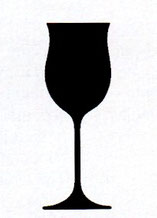
For young, light, dry white wines with elegant and balanced bouquets, such as Cortese di Gavi, Tocai Friulano, Soave, Verdicchio and Vernaccia di San Gimignano.
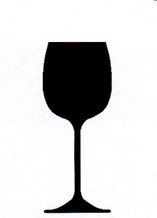
For mature white wines or those extensively matured in barriques, with evolved and persistent bouquets, like the white "Super Tuscans".
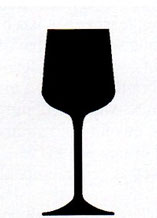
For fresh and light rosé wines that are delicately fruity, harmonious and extremely versatile, such as Rosé di Bolgheri, Bardolino Chiaretto and Montepulciano d'Abruzzo Cerasuolo.
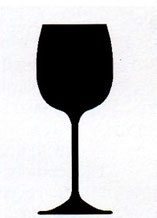
For young, light and elegant red wines that are bubbly and vivacious, enticing and endowed with ingratiating and harmonious bouquets, including Chianti dei Colli Senesi, Grignolino, Dolcetto, Barbera, Valpolicella, Trentino Cabernet.
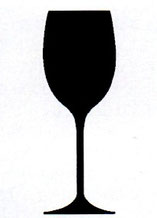
For exceptionally balanced red wines of fine breeding that have been moderately aged and possess elegant and evolved bouquets and forthright personalities, such as Chianti Classico, Vino Nobile di Montepulciano, Rosso di Montalcino and Aglianico del Volture.

Ballons for fully mature red wines.
The goblet's shape ensures complete oxygenation of the wine so that it fully develops its odors, aromas and bouquet. The glass is suited to Barbaresco, Barolo, Gattinara, Brunello di Montalcino, Chianti Classico Riserva, Amarone and the crus of Burgundy and Bordeaux.
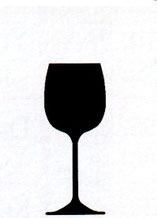
For fortified wines with generous bouquets, like Vin Santo, Picolit, Moscato Passito di Pantelleria, Port and Sherry.
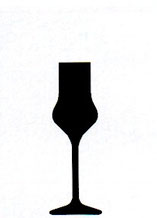
For grappa, aquavit and spirits in general. Because of the shape of the goblet, the nose is kept at a sufficient distance from the surface of the beverage. That permits appreciation of the liqueur without interference from the odor of the alcohol.
MOVE TO:






OR BACK TO:



For mature white wines or those extensively matured in barriques, with evolved and persistent bouquets, like Clastidio, Benefizio, Cabreo and Cervaro della Sala.