 RuvidaMente

































It is sometimes said that the eyes are not as important for judging a wine's quality as are the nose or the mouth. But an expert can tell by looking at a wine if it is basically sound - that is, clear, bright and free of sediment - or if it has defects that will be confirmed by smelling and tasting.
This examination analyzes:
• COLOUR
• FLUIDITY
• CLARITY
• EFFERVESCENCE (in the case of sparkling wines)
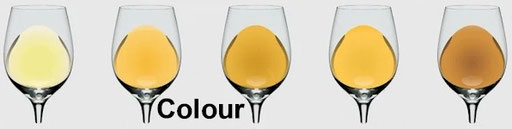
After noting the primary color - red, white, or rose - points to be considered are the tone, the intensity and the hues within each color category. This is done by filling up a tulip shaped tasting glass until about a third full and holding it by the stem against a white background - a tablecloth or piece of paper. The glass is then tilted so that the wine extends from the depth of the bowl to a thin rim near the top. This brings the various shadings of color into full evidence.

Color in White Wines
Young modern wines are often pale with hints of yellow (which may be likened to straw, lemon or sunshine) and sometimes green highlights. Color deepens with age,
tending toward full straw yellow or pale gold. More mature dry wines, particularly if aged in wood, take on rich golden tones, sometimes with hints of copper or brass. Any hints of red in a white
wine are usually signs of defects.
Wines long aged in wood or made from semi-dried grapes tend to take on amber shadings, described as tawny, old gold, rust or chestnut. Some turn almost brown from
oxidation, favorable when controlled in certain dessert or fortified types such as Marsala, but unfavorable in normal whites.
• SOFT STRAW YELLOW
The tonality of white wines that are very young, and have a light body and alcohol content. The tint can be an indication of a defective wine due to exaggeration in filtration or an excessive use
of clarifying agents.
• STRAW YELLOW WITH GREEN NUANCES
Some types, especially with very fresh wines, have greenish reflections due to the presence of chlorophyll. These wines tend to retain the green pigment of the grape.
• STRAW YELLOW
The tonality of wines on a yellow colour scale. The degree of the colour's intensity varies according to the stage of the wine's evolution.
• GOLDEN YELLOW
The tonality of wines having a characteristic yellow colour, derived from the grape variety, the choice of harvested grapes, and the enology.
The golden yellow colour, no longer vivacious, can give indications of the stage of evolution of straw yellow wines, resulting in oxidation.
• YELLOW AMBER
An amber tint is typical of wines made from partly dried grapes or fortified versions. When wines that are originally straw yellow develop an amber hue, it is a sign of a loss of quality because
of oxidation.

Color in Rosé Wines
Young wines from dark grapes vinified with little skin contact show pale hues of pink or roseate or, sometimes, hints of orange, coral or salmon. Rosato, the Italian
term for rosé, applies to wine with no more than 50 milligrams per liter of the coloring substances anthocyanins. Blush wines, as they are sometimes described, would fit this category.
Wines made with brief skin contact show deeper hues, sometimes associated with raspberries or plum blossoms. Chiaretto, Italian for claret, applies to wine with 50 to 100 milligrams per liter of
anthocyanins.
Some wines made with longer skin contact seem more red than pink. Cerasuolo, Italian for cherry red, applies to wine with more than 100 milligrams per liter of anthocyanins. Some rosé takes on
tawny shades with age, though usually signs of browning mean the wine is going off.
• PINK
The tonality of wines having a reddish colour with soft, intermediate reflections. Wines with a pink colour may obtain numerous tonalities depending on the duration of the wine's contact with the
skins during maceration and/or the intensity of the grape variety's colour.
• SLIGHTLY PINK
The tonality of wines having a soft red colour, almost transparent, vivacious, with ruby tendencies.
• PINKISH CHERRY RED
The tonality of wines on a red colour scale. The characteristic tonality of the colour is of cherries.

Color in Red Wines
Young red wines often show a deep purple or mulberry color before they begin to mature. Ruby is the term used most often to describe
a healthy wine in the early stages of maturity, though other hues of red are also noted.
With age, many red wines take on hues that are often referred to as garnet. Other descriptions are brick red or mahogany (or references to other woods) for wines that
show a warm orange color at the rim.
Pronounced yellow or brown colors at the rim indicate that the wine is past its prime, though a few types of aged red that show tawny or amber tones are still quite
drinkable.
• PURPLISH-RED
The colour is red with purple reflections, similar to the colour of peonies or the tint of a cardinal's robe. These purple reflections are more evident when looking away from the center of the
goblet and looking toward the edge.
• RUBY RED
The tonality of the colour generally present in red wines.
• GARNET
The colour is similar to the seeds of the pomegranate and is typical of mature red wines and those with remarkable structures.
• REDISH-ORANGE
Colour which wines with remarkable bodies take on during the best maturation period.

Hold the glass so that you can see through the wine, first against a white background and then against a subdued source of light, such as a window not directly in the
sun's rays or a candle or lampshade.
Wines reveal degrees of clarity, ranging from bright to normally limpid to dull or murky. Clarity is mainly an indication of quality if the wine is at its prime,
meaning that it has been in bottle for a reasonable time after any wood aging, filtering or stabilization processes.
Commercial wine, whatever its category, should be clear, perfectly transparent and free of deposits or suspended particles. Any sign of cloudiness indicates defects. If it is so murky or dense that you can't see through it, it is definitely not drinkable.
The purpose of this examination is to determine the degree of a wine's cleanness
• BRIGHT
Wine that vividly reflects light directed at it.
• VERY LIMPID
Used to describe a wine that presents perfect limpidity and transparency.
• LIMPID
Wine with good transparency, but little luminosity.
• FAIRLY LIMPID
Wine that can have a slight opalescence.
• VEILED
Wine in which its limpidity is darkened by the large particles in suspensions that may or may not be visible to the naked eye.
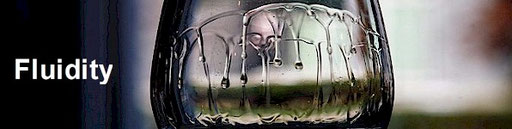
To judge a wine's basic texture and viscosity, rotate the glass so that the wine swirls around it. As the liquid settles along the sides, it will leave what are known as "legs" or "tears", arches that will be more numerous and remain longer in a heavy wine than a thin one.
The understanding of a wine's weight and texture should then be completed and confirmed by the palate.
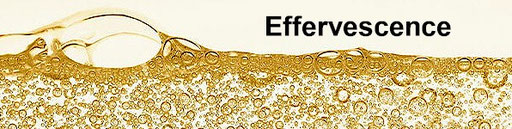
The effervescence evaluation applies only to bubbly wines, which for this purpose are divided in two main categories: a frizzante wine - sometimes also called
vivace or brioso - has light to moderate effervescence (from 1.5 to 2 grams per liter of carbon dioxide), while a spumante (from the Italian spuma or foam) is
a fully sparkling wine with 3.5 to 6 atmospheres of pressure.
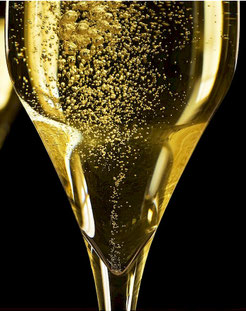
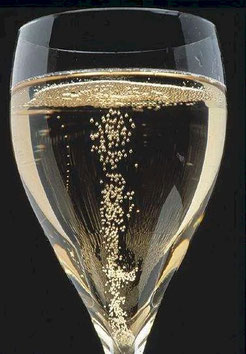
The main sign of finesse in sparkling wines is the size and intensity of the carbon-dioxide bubbles that rise from the base of the glass. As a rule, a wine made by the
classical method of fermentation in bottle will have small, persistent bubbles that, when rising, form what is known as the bead or perlage. Wines made by tank method usually have larger
bubbles.
Bubbles in frizzante wines are evident on pouring but often disappear or collect along the sides of the glass. In a good wine with carbon dioxide formed by natural
fermentation, they create a pleasant, prickly sensation in the mouth.
Bubbles in spumante have more persistence. In the best quality wines made by the classical bottle fermentation method, bubbles are fine and continue to rise in
a steady flow. Good tank-fermented spumante should also have relatively small, persistent bubbles.
If the bubbles vanish or if they are large, disjointed or seem to hang in suspension, there is probably something wrong with the wine or the glass it is served in.
FINESSE OF THE BUBBLES
CLASSIC method (Champenois)
• Very fine.
• Fine
CHARMAT method (dry and sweet)
• Fine
• Medium
• Rather large
• Large

NUMBER OF BUBBLES
• VERY NUMEROUS
A substantial number of bubbles is an attribute of the best sparkling wines.
• NUMEROUS
Quality sparkling wines or spumanti.
• FAIRLY NUMEROUS
Medium quality sparkling wines or spumanti.
• SPARSE
The wines have been laid down for too long.
- VERY SPARSE
This is a sign that the wine is too old and decrepit.
PERSISTENCE OF THE PERLAGE
• VERY PERSISTENT
Typical of sparkling wines of the best quality.
• PERSISTENT
Typical of sparkling wines of good quality that are carefully made.
• RATHER PERSISTENT
This is still acceptable rating for Classic-Method (Champenois) wines
and good for Charmat version.
• LITTLE PERSISTENT
This is due to technological deficiencies or to the fact that the wine has been aged too long.
• FAINT PERSISTENT
Is a sign of excessive aging typical of decrepit sparkling wines.
MOVE TO:






OR BACK TO:



