 RuvidaMente







































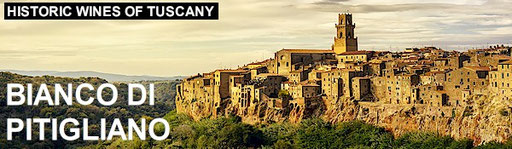
Pitigliano, an ancient Etruscan town that, quite probably, was originally known as Catetra, is perched on a rocky height in the Maremma district of southern
Tuscany. Numerous artifacts of the Etruscan period have been found at Pitigliano but little evidence remains of the long period of Roman domination.
Grape growing and winemaking have always been the leading agricultural activities at Pitigliano and the results, from a qualitative standpoint, have invariably been
excellent. The only defect of those wines, at least in ancient times, was their limited longevity, which was due to the general lack of an adequate technology of stabilization.
In the Middle Ages, merchants who stopped off in Pitigliano to acquire provisions of the town’s excellent wine, often had cause to complain. As long as it was
conserved in cellars carved from the volcanic rock below the town, the wine remained fresh and tasty. But, as soon as it was moved to another area, it lost its finesse and began to ferment
again.
With the introduction of new techniques and the accumulation of experience, problems linked to transportation and conservation of the wine of Pitigliano were
resolved.
A further indication of the virtues of the wine is provided by the decision of the Jewish community, which has existed in Pitigliano since the 16th century, to
treat it as a kosher product, which means that it can be used in religious ceremonies.
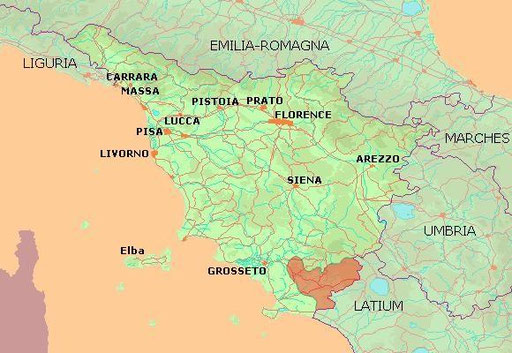
Map of the production area
GO TO CENTRAL ITALY REGIONAL WINES

OR MOVE TO THE OTHER MACRO-AREAS





SEARCH THE SITE
