 RuvidaMente




































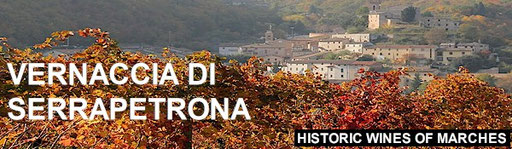
The Vernaccia di Serrapetrona is a veritable gem of the enology of the Marches, since it is as rare--it is produced in highly limited quantity--as it is
ancient.
According to local historical accounts, in the Middle Ages a Polish soldier who campaigned in the Marches as a member of a mercenary force was so fascinated by the wine
at Borgianastri, a small village near Serrapetrona where this famous Vernaccia is produced, that he coined a saying about the fortunes of those localities that has survived in the local
dialect.
There are poetic echoes of the wine’s existence going back to the 14th century and the Divine Comedy of Dante Alighieri. If the hypothesis is accepted that eels turn
out more savory when marinated in red rather than in white wine, then the poet was referring to the wine of Serrapetrona in the 24th Canto of “Il Purgatorio.”
Numerous theories have been advanced to explain the origin of the name Serrapetrona. Some say it is derived from Petronius, an exiled Roman noble who was supposed to
have settled in the area. Or it could more simply be due to the stony (petrus) fields that surround the community. What is certain is that in 1893 the production of the wine was so limited that
there was a widespread assumption that the Vernaccia Nera variety had become extinct.
Yet nearly two decades earlier, in 1876, the Ampelographical Bulletin of the Agriculture Ministry had insisted that the Serrapetrona Vernaccia “was, as late as
1872, considered the leading red variety for the production of excellent table wines.”
Despite the fine quality of this natural red sparkling wine, the product of a special harvest in which half of the grapes are put out to dry on mats before being
pressed, output is still quite limited. Although production increased following Vernaccia’s admittance to the ranks of the DOC wines, the area planted in the variety’s vines
amounts to only 47 hectares.
Map of the production area

GO TO CENTRAL ITALY REGIONAL WINES

OR MOVE TO THE OTHER MACRO-AREAS





SEARCH THE SITE
