 RuvidaMente












































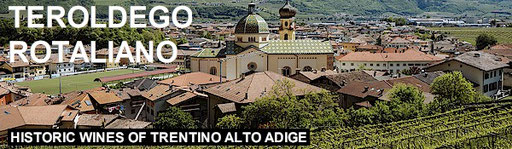
In the framework of the Trentino’s enology, Teroldego has always played a role of great prestige. The vast flat area in the province of Trent known as the
Campo Rotaliano has proved to be a highly favorable habitat for the variety, which has been cultivated in the region since the earliest times. It is only in that plain, with its special exposure
and stony and pebbly soil, that Teroldego has been able to develop the organoleptic values that have made its wines famous.
There is no certain evidence as to the origins of the “princely wine” of the Trentino, as Teroldego Rotaliano has been described for many centuries. However,
various hypotheses have been formulated. There are some experts who argue that the variety originated in the Trentino on the hills of Sorni. Others suggest that the name Teroldego is derived from
the German term “Tiroler Gold” or “gold of the Tirol.”
According to some recent etymological interpretations, it seems that the root “ teer,” which in German means “tar,” refers precisely to one of the
characteristics of the wine’s flavor.
Teroldego Rotaliano made its first appearance in literature with the publication toward the middle of the 17th century of the book Trento con il sacro
Concilio ed altri notabili (Trent with the Sacred Council and Other Notable Events) by Michelangelo Mariani, historian of the Council of Trent.
In the book, Mariani expresses a highly favorable judgment of the wine and warmly praises its excellent quality. In addition, some other historical documents of that period indicate that the wine had already won a place on a wide market.
Because of Teroldego Rotaliano’s fine sensory qualities and the outstanding techniques applied in cultivating the grapes and making the wine, its reputation has grown throughout the centuries, as was recognized in 1971 with the assignment of the official Denominazione di Origine Controllata.
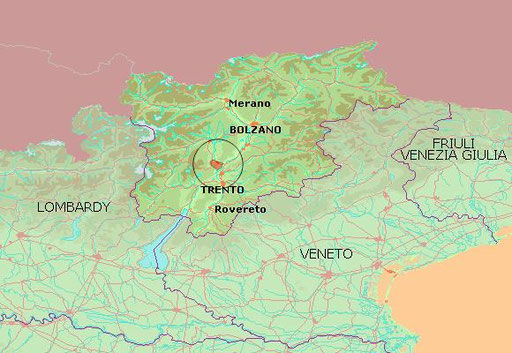
Map of the production area
GO TO NORTHWEST REGIONAL WINES

OR MOVE TO THE OTHER MACRO-AREAS






SEARCH THE SITE
