 RuvidaMente














































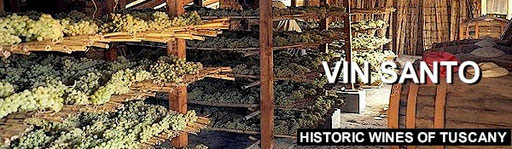
Ever since the Middle Ages, Vin Santo has enjoyed a place of honor in Tuscan oenology. There are many stories about the origin of this wine's name.
One of these relates of a 14th-century friar who used to hand out the wine that had already been used at Mass to people who were ill, believing that it had healing and miraculous properties and was therefore "santo" or holy.
Another story relates that Greek Patriarch John Bessarion, who was visiting Florence on the occasion of the Ecumenical Council on 1349, was served Vin Pretto, or "pure wine," a local wine that no longer exists.
Upon drinking it, the patriarch declared, "This wine is from Xanthos!" But the Italians at the table thought he said the wine was "santo," and started calling the old Vin Pretto, Vin Santo.
In any case, the wine's name has probably got something to do with the fact that it was used during Mass.
Vin Santo has been produced since the 14th century in Tuscany. It is therefore very appropriate that there should be a D.O.C. appellation exclusively
for this wine. Even before the 14th century, a similar wine, called Vin Pretto (or 'pure wine') was produced here.
Vin Santo has always been known as the wine of friendship and hospitality. No household, whether poor or rich, was ever without it. It was served at any time
of the day, although most people preferred it at the end of a meal.
Today, Vin Santo is still considered to be a symbol of tradition because it is produced using age-old methods: from the selection of the best grapes to their drying on mats and racks; from the preservation of the grapes in ventilated garrets to the extended ageing of the wine in small barrels called "caratelli."
Maps of the production areas
VIN SANTO
DEL CHIANTI

VIN SANTO
DEL CHIANTI CLASSICO
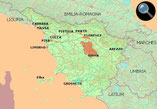
VIN SANTO
DI MONTEPULCIANO
GO TO CENTRAL ITALY REGIONAL WINES

OR MOVE TO THE OTHER MACRO-AREAS






SEARCH THE SITE
