 RuvidaMente








































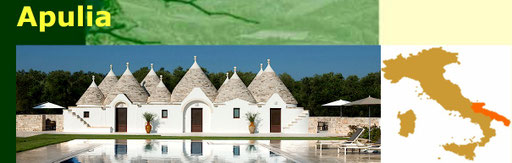
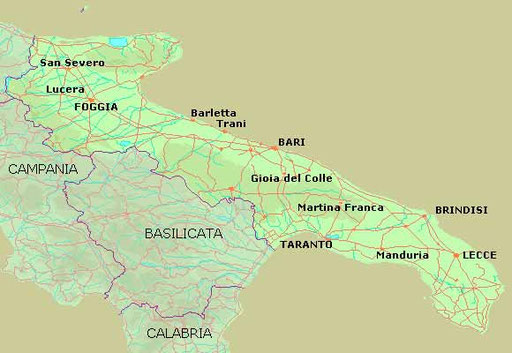
Apulia is a long, slender region whose tip, the Salento peninsula, forms the heel of the Italian boot, consists of rolling plains and gentle uplands, sources of grain
and the nation's largest volumes of wine and olive oil. Apulia has been known for abundance since Phoenicians and Greeks arrived and found Oscans and Messapians, some of whom lived in trulli,
dwellings with conical stone roofs, already competent farmers. Although the Apulian diet draws its sustenance from the land, fish from the Adriatic and Ionian Seas lends enviable balance.
Vegetables figure prominently in pastas, soups, stews and salads. Apulia is the domain of the fava (the "queen of beans"), though artichokes, chicory, turnip
greens, the "rocket" green called ruca or rucola, cabbage, cauliflower, eggplant and peppers are indispensable. A curiosity are lampasciuoli, onion-like bulbs of notable
nutritive value, whose bitterness brings a unique tang to Apulian dishes.
Olive trees thrive nearly everywhere in Apulia, whose production of more than 200 million liters a year accounts for nearly half of Italy's total volume of oil. Four
types have been singled out for DOP: Colline di Brindisi, Dauno, Terra di Bari and Terra di Otranto.
The region is also an important source of organic produce, accounting for about 10 percent of the nation's total.
Pasta, from the region's supplies of durum wheat, range through variations on maccheroni, spaghetti and lasagne to the small shells called
orecchiette (or strascinati) and cavatieddi, served mainly with vegetables or tomato sauces, usually with garlic and peppers. Rice is also esteemed, notably in tiella,
which refers to an earthenware baking dish, though the name may have derived from the Spanish rice dish of paella. Tortiera is a casserole, whose various ingredients are
gratinéed with pecorino or caciocavallo or pane grattugiato, breadcrumbs which substitute for cheese in many southern dishes.
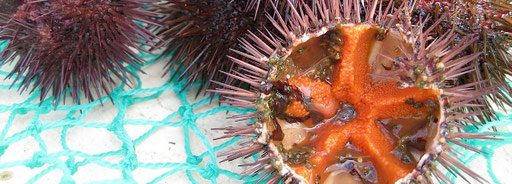
The Adriatic and Ionian seas provide a wealth of seafood and frutti di mare. Especially prized are oysters and mussels from beds in the Gulf of Taranto, though the
range includes octopus, cuttlefish, squid, anchovies, sardines and sea urchins.
The Murge plateaux provide grazing land for lamb and kid, the preferred meats, though the diet is enhanced by beef and poultry and pork as the base of an ample array of
salumi. Cheeses cover the southern gamut of pecorino and pasta filata varieties, though among the latter burrata (whose name refers to the buttery softness of its
cream-filled interior) stands out from the towns of Andria and Martina Franca. The hard cheese called Canestrato Pugliese, named
after the canestre or reed baskets in which it was formed, is protected by DOP. Part of the Caciocavallo Silano DOP is in
Apulia.
Apulian bakers specialize in the flat focaccia (or puddica) and variations of pizza from both wheat flour and potatoes. These include
calzoni, calzuncieddi, panzerotti and sfogliate, in which the dough is folded over a filling and fried or baked. Biscuits are also popular, especially the doughnut
shaped frisedde and the curly taralli. A rich array of pastries and sweets is enhanced by such ingredients as ricotta, almonds for marzipan, candied fruit and
honey.
REGIONAL SPECIALITIES:
OLIVE OILS
• COLLINE DI BRINDISI • DAUNO • TERRA DI BARI •
• TERRA D'OTRANTO •
CHEESES
• CACIOCAVALLO SILANO • CANESTRATO PUGLIESE
•
Fruits
• CLEMENTINA DEL GOLFO DI TARANTO •
Vegetables
• OLIVA DA TAVOLA LA BELLA DELLA DAUNIA •
BREADS & CEREALS
• PANE DI ALTAMURA •
GO TO MORE NORTH REGIONAL FOODS

Follow the links below to get an
overview of the other main macro-areas of Italian food.


Or quickly discover Italian foods by type




SEARCH THE SITE
