 RuvidaMente



























Frequenters of modern Sardinia's beach resorts consider the island a haven for seafood that goes so nicely on summer days with cool white Vermentino or
Nuragus. And indeed the rugged coasts provide such delights as rock lobsters, crabs, anchovies, squid, clams and the sardines that may or may not have taken their name from the island.
Spicy fish soups are called burrida and cassòla. At Oristano they dry mullet eggs into blocks of delectably pungent bottarga or
buttariga to slice thin over pasta or salads.
Yet it's said that the real Sardinian cooking is the rustic fare of the hills and the hearth: roast meats, sausages and salame, savory sharp Pecorino Sardo cheese and red wines of the weight of Cannonau and
Monica. Near the town of Nuoro, in the Barbagia hills, they skewer suckling pig called porceddu or lamb or kid on poles of aromatic wood to be turned occasionally as they roast
for hours before an open wood fire.
Now rare is the method of roasting a carraxiu, in a pit lined with branches of juniper, olive and rosemary, over which is lit a bonfire whose falling embers encase the meat and cook it slowly with the juices sealed inside.

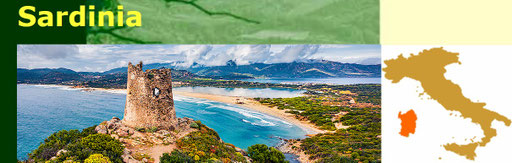
The island of Sardinia bears the marks of outsiders, from Phoenicians, Carthaginians and Romans to Genoese, Pisans and the Savoys who proclaimed the Kingdom of
Sardinia. But Spaniards, who ruled for centuries before, lent the most pronounced accents to foods and wines. Still, the cooking of Sardinia remains as wonderfully eccentric as the nuraghe, the
prehistoric stone towers whose origins are an enigma.
The sunny island in mid-Mediterranean boasts ideal natural conditions for things that grow, as attested by the fact that Sardinia is Italy's leading producer of organic
produce, accounting for nearly a third of the nation's land cultivated by biological methods. Tomatoes are used generously in sauces, as
are artichokes, fava beans, peas, eggplant and zucchini. Foods here are redolent of herbs, including wild fennel, juniper and myrtle, used
with hare, boar and game birds.
Each Sardinian village bakes its own breads, variations on the large round loaves known as tondus, the doughnut shaped còzzula or stick-like zicchi,
though names vary almost as much as do styles.
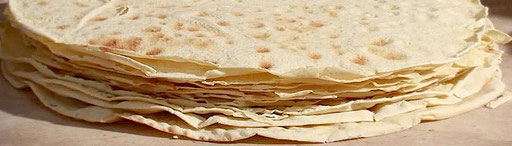
Bakers everywhere share a liking for the flat pane carasau and its crisp variation called carta da musica (music paper). The island boasts a tempting
range of sweet biscuits, fritters, pastries and cakes, which often contain almond, ricotta, raisins and elaborate spices.
Sardinians consume quantities of dried pasta, in the familiar forms of spaghetti and maccheroni, though they also make the singular ravioli-like
culingiones and the gnocchi called is malloreddus, described as the region's most typical dish.
Sardinia, more than any other region, is a land of shepherds, whose Razza Sarda sheep account for the
class of Pecorino Sardo and Fiore Sardo cheeses, whether
eaten fresh or aged for grating. Sardinia is also a major producer of Pecorino Romano. Also notable are goat's milk cheeses,
caciocavallo (or casizolu) and provolone.
REGIONAL SPECIALITIES:
FRESH & CURED MEATS
• AGNELLO DI SARDEGNA •
CHEESES
• FIORE SARDO • PECORINO ROMANO • PECORINO SARDO •
GOURMET SPECIALITIES
• BOTTARGA •
GO TO MORE NORTH REGIONAL FOODS

Follow the links below to get an
overview of the other main macro-areas of Italian food.

Or quickly discover Italian foods by type




SEARCH THE SITE
