 RuvidaMente




































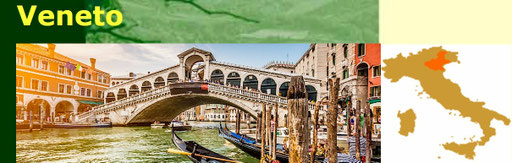
Venetian cooking has known exotic touches since the days when crusaders, merchants and adventurers such as Marco Polo opened trade routes to the east, providing Europe with coffee, tea and novel grains, herbs and spices. Still, though foods may be rich, varied and sometimes bizarre, Veneto boasts an enviably balanced diet from an eclectic range of sources.
The Adriatic abounds in fish. The plains of the Po, Adige and Piave rivers supply livestock, rice for risotto and corn for polenta. The hills that flank the Alps from Lake Garda to Cortina d'Ampezzo provide game, mushrooms, wine and a bit of olive oil, along with the climate for aging prosciutto, salame and cheeses. Gardens everywhere furnish fresh vegetables, notably the radicchio species of endive of Treviso and Verona.
As a seafood haven, Venice exalts risotto nero (blackened with cuttlefish ink), scampi (prawns) and spider crabs called granseole, or moleche when males shed their shells in spring and fall. Venetians have their own lexicon for creatures from the lagoon: cannolicchi or cape longhe (razor-shell clams), peoci (mussels), garusoli (spiky murex sea snails), cape sante and the smaller canestrelli (scallops), folpetti (curled octopus), schile (tiny shrimp) and sardele (sardines). But Venetians also dine on the earthly likes of risi e bisi (rice and peas), fegato alla veneziana (calf's liver and onions) and Carpaccio. That raw beef dish originated in Venice, as did the rampantly fashionable dessert called tiramisù.
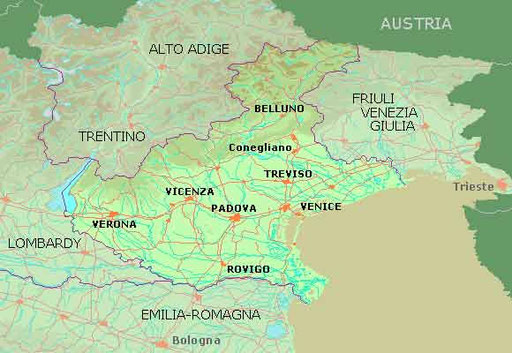
Cured pork products include variations on salami called soppressata, as well as cotechino and other types of sausage. The prosciutto from the Berici and Euganei hills in the southern Veneto rates a DOP. Protected cheeses take in Asiago, from Alpine meadows, and Monte Veronese, from the Lessini hills north of Verona, as well as Grana Padano, Montasio, Provolone Valpadana and Taleggio, shared with other regions.
Rice has always found greater favor among Venetians than pasta. The compact Vialone Nano from Verona's lowlands rates an IGP. It excels for risotto, or risoto, usually made by sautéeing the rice and base ingredients then simmering them in broth without stirring. Rice dishes, often substantial, include an endless variety of meat, fish, game, vegetables, mushrooms, herbs and odd combinations such as riso con i bruscàndoli (wild hop shoots) and risi in cavroman (mutton spiced with cinnamon).
Special handmade pastas are the spaghetti-like bigoli, the ravioli-like cassunziei and the tagliatelle-like paparele. Noodles of all types go with beans in pasta e fagioli (fasioi in dialect) the prime example of a range of soups made with rice, meat, fish and vegetables. The red beans of Lamon in the valleys around Belluno have IGP status.
The versatile radicchio rosso is used for salads, cooked in risotto and soups or grilled with oil and lemon as a separate dish. IGP status has been reserved for Radicchio Rosso di Treviso and Radicchio Variegato di Castelfranco. Also prized are tender artichokes and the white asparagus of Bassano del Grappa, eaten with eggs beaten with olive oil and vinegar. The olive oil from the shores of Lake Garda and Verona's hills rate the DOP Garda.
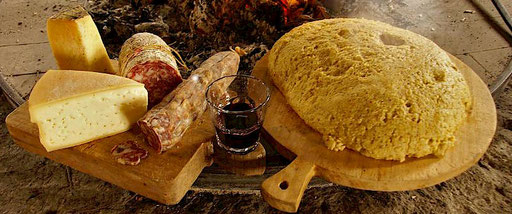
Polenta can be a primo, though it's more often part of the main course, as a mush or grilled with meat dishes such as pastissada, stew made with beef or with horsemeat as pastissada de caval in Verona. There pearà, a sauce of beef marrow, grated bread and pepper is served with the ubiquitous bollito misto. Polenta accompanies duck, goose, guinea fowl, turkey (sometimes cooked with pomegranate) and game, such as wood pigeon, thrush, duck, dressed with peverada (sauce of chicken livers, salame, anchovies, oil, garlic, vinegar). Polenta also goes with carpione (salmon trout found only in Lake Garda), with stewed bisati (eels from the river deltas) or with dried cod called baccalà (but really stoccafisso), renowned from Vicenza.
The region's pastries and desserts include baicoli (sugar biscuits), zaleti (cornmeal-raisin cookies), frìtole (fritters, with candied fruit and nuts for Carnival) and crema fritta (fried cream custard). Popular beyond the region are Verona's golden pandoro Christmas cake, the crumbly torta sabbiosa and fregolotta (with almonds) plus, of course, tiramisù.
Regional SpecialitIes:
Olive Oils
Fresh & Cured Meats
• Cotechino di Modena • Mortadella Bologna •
• Prosciutto Veneto Berico-Euganeo •
• Salamini italiani alla cacciatora • Sopressa Vicentina •
Rice
• RISO NANO VIALONE VERONESE •
Cheeses
• Asiago • Grana Padano • Montasio • Monte Veronese •
• Provolone Val Padana • Taleggio •
Fruits
• Ciliegia di Marostica • Marrone di San Zeno •
Vegetables
• Asparago bianco di Cimadolmo • Fagiolo di Lamon •
• Radicchio Rosso di Treviso •
• Radicchio Variegato di Castelfranco •
SWEETS & CONFECTIONS
GO TO MORE NORTH REGIONAL FOODS

• AOSTA VALLEY • PIEDMONT • LIGURIA • LOMBARDY • VENETO •
• TRENTINO ALTO ADIGE • FRIULI VENEZIA GIULIA • EMILIA ROMAGNA •
Follow the links below to get an
overview of the other main macro-areas of Italian food.

Or quickly discover Italian foods by type




SEARCH THE SITE
