 RuvidaMente

































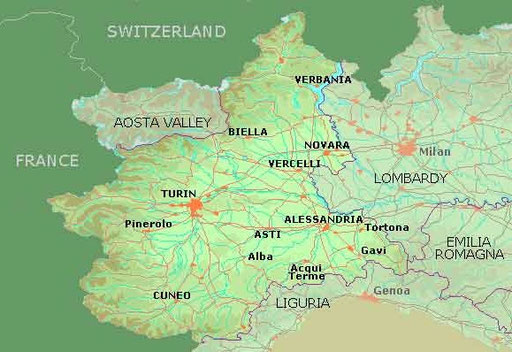
Piedmontese uphold their heritage of food and wine with unequaled staunchness. Turin, as the home of the Savoy dynasty that reigned as Italy's royal family, shared a culinary savoir faire with neighboring France. But the noblest examples of the good tastes of the past are to be found in the substantial cooking of the hill country. The flavors of Piedmont reach peaks in autumn, when the harvest is in and wooded slopes from the Alps to the Apennines supply game, mushrooms and white truffles, whose magical aromas enhance pastas and risottos, meats and cheeses. Those foods call for full-bodied red wines such as Barolo, Barbaresco and Barbera.
Piedmont's range of antipasti is so vast and varied that it represents a compendium of regional cooking with dishes that elsewhere might qualify as main courses. Classic openers are fonduta (cheese fondue), insalata di carne cruda (marinated raw beef), finanziera (a bizarre meat stew), vitello tonnato (veal with tuna sauce) and bagna caôda (hot sauce for raw vegetables).
Salads may consist of greens, asparagus, sweet-sour onions, beans or wild mushrooms. Red and yellow bell peppers are eaten with dressings or, like other vegetables, blended in flans called sformati. Zucchini flowers or Savoy cabbage (verza) leaves with meat-cheese fillings may be called caponet. Rice and cheese are used for croquettes, cakes and fritters. Eggs may be fried sunny side up with truffles or cooked with vegetables or peppers as frittata or in an onion custard called tartrà.
Antipasto lists continue with tongue, tripe, fried pig's trotters called batsoa (silk stockings), tonno di coniglio (marinated rabbit tender
as tuna) and stewed snails. Patés and terrines are made of liver and game birds. Fine pork salumi include salame alla douja (aged in lard in earthenware vases) and blood sausages called
sanguinacci. Salami is also made from beef, goose, trout and potatoes. Munched with virtually everything are grissini,
yard-long breadsticks first baked in Turin in the 17th century.
Pastas are dominated by slender, hand-cut noodles called tajarin and ravioli-like envelopes called agnolotti, which take to different forms, fillings and sauces. Flatlands near the Po around Vercelli and Novara are Europe's leading suppliers of rice, notably
the prized Carnaroli for risotto cooked with beans and pork as panissa or paniscia or with frogs, vegetable or meat sauces or simply with butter and shaved truffles.
Polenta and potato gnocchi are favored in places, as are hearty soups, such as cisrà, with chickpeas and pork rind, and tôfeja, with beans, corn flour,
vegetables and pork.
The region raises prized beef of the breed known as razza piemontese to be braised in red wine, roasted, grilled or simmered as the base of bollito
misto. Recipes abound for veal, lamb, kid and rabbit, as well as duck, goose, chicken, capon and pigeon. Pheasant, partridge, hare and venison are favorites among game. Meats and other items
combine in Italy's most ambitious fritto misto.

Fried pork liver is the base of a dish called griva. Tapulone is a stew of donkey meat served around Novara. Anchovies and tuna flavor many a dish,
though fresh fish is secondary in the diet, with an exception for trout from mountain lakes and streams.
Piedmont produces quantities of Gorgonzola from Novara, as well as Taleggio and Grana Padano, DOP cheeses that are also made in neighboring regions. Piedmont also
offers an intricate array of local cheeses protected by DOP. Notable are the soft Robiola di Roccaverano (based on sheep's
milk) and Murazzano (based on cow's milk with some goat or sheep's milk blended in). The little wheels of Toma Piemontese come from hill towns in the region. Tome or tume are usually based on cow's milk, as is the rare Castelmagno, sharp in flavor and flecked with blue mold. Bra, named for the
town near Cuneo, may be soft when young or hard with age. The similar Raschera comes from the heights of the Maritime Alps. A
pervasively pungent fermented cheese is known variously as brôs, bruss, bruz. Fontina, preferably from
Valle d'Aosta, is widely used in cooking.
Piedmont is a major producer of hazelnuts, protected under IGP. They are used in pastries, cakes, chocolates and the nougat called torrone. Chestnuts are
roasted or candied as marrons glacés. Among a wealth of biscuits, pastries and desserts, standouts are corn flour (meliga) cookies, the chocolate or coffee flavored custard cake called
bonèt, cream cooked with caramel as panna cotta, an opulent chocolate cake called torta gianduia and fluffy zabaione, which supposedly originated here.
REGIONAL SPECIALITIES:
CHEESES
• BRA • CASTELMAGNO • GORGONZOLA • GRANA PADANO •
• MURAZZANO • RASCHERA • ROBIOLA DI ROCCAVERANO •
• TALEGGIO • TOMA PIEMONTESE •
FRUITS
SWEETS & CONFECTIONS
• CANESTRELLI • GIANDUIOTTI • KRUMIRI •
GO TO MORE NORTH REGIONAL FOODS

• AOSTA VALLEY • PIEDMONT • LIGURIA • LOMBARDY • VENETO •
• TRENTINO ALTO ADIGE • FRIULI VENEZIA GIULIA • EMILIA ROMAGNA •
Follow the links below to get an
overview of the other main macro-areas of Italian food.

Or quickly discover Italian foods by type




SEARCH THE SITE
