 RuvidaMente
























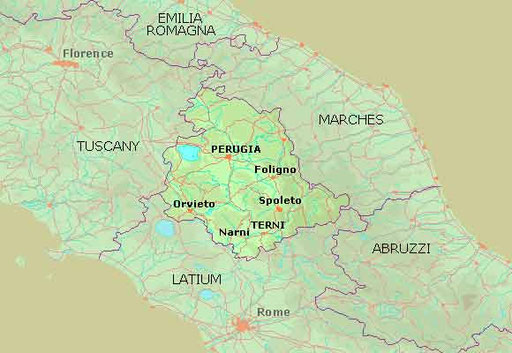
Umbria is a compact region at the core of the peninsula, and it is known as the green heart of Italy. Its attractions include the art and architecture of its hill
towns, Perugia, Assisi, Orvieto, Spoleto and Todi, among them, and the legends of its many saints, led by Francis of Assisi. But connoisseurs also know that nowhere in Italy are the pleasures of
country cooking and local wines offered more graciously than in Umbria.
Since the region has no access to the sea, its peoples, beginning with the ancient Umbri and Etruscans who inhabited territories on opposite sides of the Tiber River,
have always relied on the generosity of the land. There are few secrets to Umbrian cooking, other than the native's insistence or obsession, really, on home-grown produce: fresh vegetables and
fruit, dense green olive oil, roast meats, poultry and game, pecorino cheese and the herbs, greens and mushrooms that grow spontaneously on wooded hillsides.
Add truffles and even the humblest dish becomes divine. Norcia, a town on the edge of the Apennines, is Italy's prime source of black truffles, served fresh with pasta,
meat and egg dishes, or even pounded into paste with anchovies and garlic. The "black diamonds" are preserved in various ways, including in cheese known as pecorino tartufato.
Even more prized are Umbria's white truffles, always eaten fresh.
Norcia as the ancestral home of pork butchers known everywhere as norcini, produces prosciutto that rates an IGP, as well as salame and such specialties as
mazzafegati (piquant liver sausages with orange rinds, pine nuts and raisins). Porchetta is delicious in Umbria, as are Perugia's Chianina beef, lamb, rabbit, free-range
chickens and wood pigeons. Hare and boar are prized, as are fish and eels from Lake Trasimeno and the upper reaches of the Tiber.
Umbria produces a major share of dried pasta for the national market, though its homemade egg pasta, notably tagliatelle with ragout, can rival the elite of Emilia.
Other hand-rolled types are ciriole and stringozzi, which resemble rustic spaghetti.
The Umbrian diet relies on salads and cooked vegetables, notably cardoons (called gobbi) and lentils
from the mountain town of Castelluccio protected by IGP. In the autumn, woods abound with porcini mushrooms and chestnuts. Olives grown in the Nera valley near Spoleto and around Lake Trasimeno
produce some of Italy's finest extra virgin oil, protected under the regionwide DOP Umbria.
Huge loaves of unsalted pane casereccio are baked in wood ovens, as are torte, spongy flour and egg breads flavored with pecorino or pork crackling. Bakers
also make sweet buns called pan nociato (with walnuts, grapes, cloves and pecorino) and pan pepato (with almonds, walnuts, hazelnuts, raisins and candied fruit) and
cakes called ciaramicola and torcolo.
REGIONAL SPECIALITIES:
OLIVE OILS
UMBRIA
FRESH & CURED MEATS
• PROSCIUTTO DI NORCIA • SALAMINI ITALIANI ALLA
CACCIATORA •
• VITELLONE BIANCO DELL'APPENNINO CENTRALE •
• CIAUSCOLO •
CHEESES
• PECORINO TOSCANO •
VEGETABLES
• LENTICCHIA DI CASTELLUCCIO DI NORCIA • TRUFFLES •
GO TO MORE NORTH REGIONAL FOODS

Follow the links below to get an
overview of the other main macro-areas of Italian food.

Or quickly discover Italian foods by type




SEARCH THE SITE
